

If you spend enough time around creator forums, Instagram strategy threads, or group chats full of social media managers, you’ll run into this question sooner or later: does rewatching your own Instagram Stories help the algorithm? It sounds plausible. You post a Story, tap through it yourself, maybe watch it again, and wonder whether that extra activity nudges reach, boosts engagement, or tells Instagram your content is worth showing to more people.
That belief sticks around because Stories feel unusually personal and unusually measurable. You can see views, replies, taps, exits, and sometimes weird shifts that make the platform look more mysterious than it probably is. Add in Instagram’s metric changes in 2025, including the move toward Views as a more central reporting metric across content types, and it becomes even easier to confuse a number changing with the algorithm rewarding you.
Here’s the honest answer: there’s no strong public evidence that rewatching your own Stories is a meaningful ranking tactic. Instagram’s public explanations of Stories ranking point much more toward predicted audience behavior, especially whether someone is likely to tap into your Story, like it, or reply to it. Stories are also described as a format built more for connecting with people who already know you than for broad discovery. In other words, the system appears to care far more about how your audience behaves than whether you replay your own content once or twice.

What People Usually Mean by “Affect the Algorithm”
When people ask whether rewatching their own Stories matters, they’re usually bundling together a few different questions.
Sometimes they mean reach: will more followers see this Story because I watched it again? Sometimes they mean ranking: will my Story move closer to the front of someone’s Story tray? Sometimes they mean engagement: will this help the Story look stronger in Insights? And sometimes they simply mean performance anxiety: “Did I accidentally help or hurt the post by touching it too much?”
That distinction matters. A metric can move without changing distribution. A Story can collect views without gaining meaningful traction. And a creator action inside the app is not automatically the same thing as a useful ranking signal. That’s where a lot of Instagram algorithm myths begin: people assume all activity counts equally, when platforms rarely work that way.
Instagram Myth Busting: What the Rewatching Stories Algorithm Question Gets Wrong
The core flaw in the rewatching stories algorithm myth is that it treats all views as strategically equal. They probably aren’t.
Instagram’s public guidance around Stories ranking, as summarized from Adam Mosseri’s explanation in early 2025, focuses on the likelihood that a user will tap on the Story, like it, or reply to it with a message. That framing is important because it centers predicted user interest and relationship-driven engagement, not creator self-checking behavior. It also reinforces a broader point: Stories are meant to keep existing connections warm, not to serve as your main discovery engine.
So, does rewatching Stories matter? In practical terms, not much. If you rewatch your own Story to check formatting, sticker placement, captions, or pacing, that’s a quality-control habit. But there’s no public reason to believe Instagram treats that behavior as a powerful growth signal. Even if it registers somewhere in the system, that does not mean it materially changes Instagram Stories ranking in the way creators hope.
Personal Viewing Behavior vs. Real Ranking Signals
This is where it helps to separate creator behavior from audience behavior.
Your own rewatch is self-generated activity. Audience behavior, on the other hand, tells Instagram something more valuable: whether real viewers stop, continue, react, reply, or leave. That’s a much richer signal set. If viewers consistently tap into your Stories, send replies, like slides, interact with polls, or keep watching through a sequence, Instagram has a stronger reason to believe your Stories are relevant to them.

That doesn’t mean every metric is a direct ranking factor. Some metrics are better understood as diagnostics. Taps forward, exits, back taps, shares, replies, and link clicks help you understand how people are moving through your Story sequence and whether the content is holding attention. Instagram’s own analytics ecosystem and third-party analysis both point creators toward navigation and interaction metrics as the better lens for Story performance.
In plain English: rewatching your own Story is mostly about you. Ranking signals are mostly about them.
Myth vs. Reality
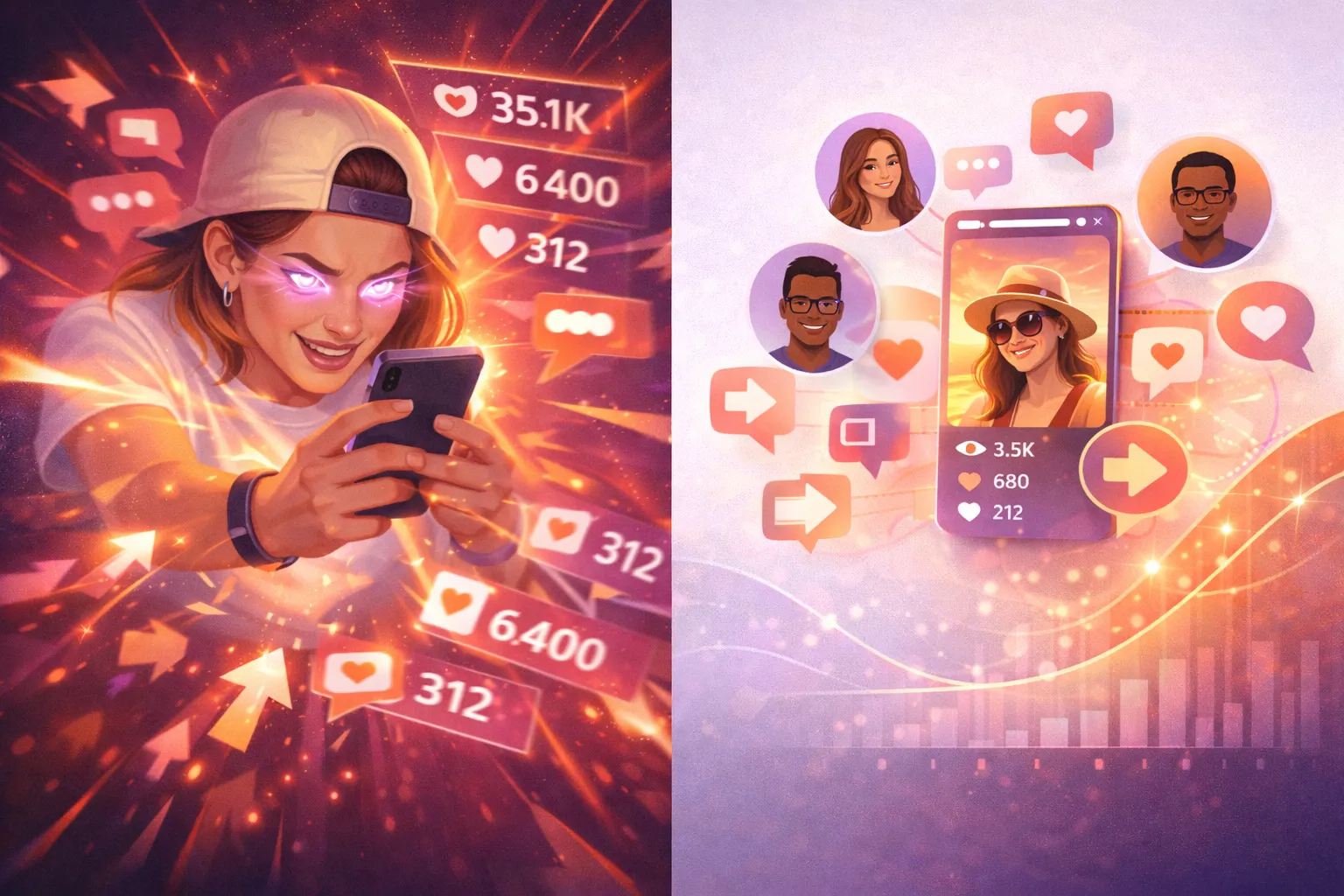
- Myth: Rewatching your own Story boosts reach
- Reality: Instagram’s public explanation of Stories ranking emphasizes predicted user actions like taps, likes, and replies, not self-replays by the account owner.
- Myth: If the view count changes, the algorithm must be responding
- Reality: Reporting changes and analytics definitions can affect how creators interpret performance. Since Instagram shifted toward Views as a central metric in 2025, it has become even more important to separate what is being counted from what is driving distribution.
- Myth: Tiny manual actions are the secret to Story growth
- Reality: The stronger pattern is audience response over time. Stories work better as a relationship and retention format than as a shortcut-heavy discovery tactic.
Why Creators Misread Story Performance So Easily
Stories invite superstition because they move fast. You post, check the viewer list, tap through your own frames, reopen Insights, and start spotting patterns. The problem is that short-lived content produces lots of false positives.
A Story may gain more views after you rewatch it simply because followers are opening Instagram at that moment. A Story may seem weak because the first frame underperformed, even if later frames were solid. And because Stories disappear so quickly, creators often overreact to tiny shifts that say more about timing than about ranking. That’s one reason benchmark studies now talk about Stories less as a reach-first format and more as a retention format. Socialinsider’s 2025 benchmark report, for example, frames Stories as increasingly about retention and ongoing interaction rather than pure visibility.
There’s another trap here too: people tend to confuse viewer order, view counts, and ranking. Those are not interchangeable ideas. Even when they appear related on the surface, they do not automatically reveal how Instagram is weighting your content behind the scenes.
What Probably Matters More for Instagram Story Performance
If your goal is better Story reach, better engagement, or healthier Story views and Instagram algorithm outcomes over time, these signals are far more useful than self-replays.

Strong first-frame retention
The opening slide does a huge amount of work. According to Socialinsider’s 2025 benchmark analysis, the heaviest drop-off often happens in the first few Stories of a sequence. If you lose people there, nothing that comes later gets much of a chance.
Taps forward and exits
These aren’t necessarily direct ranking levers on their own, but they’re powerful indicators of whether your Story is moving too slowly, saying too little, or missing the viewer’s intent. Instagram Story analytics specifically track forward taps, exits, back taps, replies, shares, and related interaction signals for this reason.
Replies, likes, shares, and sticker interactions
These align more closely with what Instagram publicly says matters for Stories: whether users are likely to engage with the content. If someone replies to your Story, that’s a much stronger sign of relevance than you replaying it yourself.
Retention and sequence quality
Creators often obsess over the first view count and ignore the arc. But Story performance usually improves when the sequence has momentum: a clear opening, a reason to keep watching, and a clean payoff. Socialinsider’s analysis also found that exits and forward taps reveal a lot about pacing, while longer, better-structured sequences can hold attention more effectively once the viewer is invested.
Common Misconceptions About Story Views and Ranking
One common misconception is that every extra view is equally valuable. It isn’t. A view tells you the content was opened. It doesn’t automatically tell you that the person cared, stayed, or responded.
Another misconception is that stories should be treated like a mass-reach format. Instagram’s own public framing suggests otherwise. Stories are better understood as a channel for your existing audience: timely updates, behind-the-scenes content, closer interaction, and lighter-touch communication with people already somewhat connected to you.
And then there’s the classic creator belief that if something is easy to do, it might secretly be a hack. Usually, it’s just a habit. Rewatching your own Story can be helpful for editing and QA. It is not a serious content strategy.
Practical Advice for Creators Who Want Better Story Reach
If you want stronger Story performance, focus less on manipulating numbers and more on making the sequence worth watching.

- Audit your first two or three frames. Are they immediately clear? Do they give the viewer a reason to continue? If the first slide is vague, slow, or visually cluttered, your exit rate will tell on you.
- Build stories in small arcs rather than isolated slides. A simple sequence works well: hook, detail, proof, prompt. That structure often performs better than posting five unrelated updates in a row.
- Look closely at your interaction design. Use polls, question boxes, sliders, or DM prompts when they fit the content. Not because stickers are magic, but because they create the kinds of actions Instagram has publicly said matter more for Stories.
- Read your Story analytics with more nuance. Check exits, back taps, forward taps, replies, shares, and link clicks alongside views. Instagram Story analytics are specifically organized around reach, navigation, and interaction metrics because those categories tell a fuller story than raw views alone.
Conclusion
So, let’s answer the main question directly: no, rewatching your own Instagram Stories is not a meaningful algorithm strategy. As far as public evidence goes, Instagram myth busting leads to a pretty simple conclusion: the rewatching stories algorithm theory is mostly a misunderstanding of how Story performance works.
Your own replay may help you catch a typo, test pacing, or make sure a sticker didn’t land in the wrong spot. That’s useful. But if you want better Instagram Stories ranking, the smarter bet is to improve the signals that come from actual viewers: taps into the Story, replies, likes, shares, lower exits, better retention, and stronger sequence design. In other words, stop trying to impress the algorithm with your own rewatch, and start giving your audience a reason to stay.
FAQ
Does rewatching your own Instagram Story increase views? It may affect how a view is counted in some analytics contexts, but there’s no strong public basis for treating self-rewatching as a growth tactic. More important than an extra self-view is whether real viewers continue watching and interact.
Does rewatching Stories matter for Instagram ranking? Not in any meaningful strategic sense that Instagram has publicly confirmed. The platform’s public guidance around Stories ranking emphasizes predicted user actions like taps, likes, and replies.
What matters more than self-rewatching? Replies, likes, shares, sticker interactions, retention, taps forward, exits, and the overall quality of your Story sequence matter far more for understanding and improving performance.
Are Story views the same as Story performance? No. Views tell you that a Story was opened. Performance is broader: how many people stayed, interacted, clicked, replied, or moved through the sequence without dropping off.
Should creators rewatch their own Stories at all? Yes, but for practical reasons: quality control, pacing, readability, and link or sticker placement. Just don’t mistake that habit for an algorithm lever.